
 عربى
 English
 Español
 Français

In a world where first impressions matter, the 100#S Paper Clamshell Takeout Box offers a clean, min...
See DetailsDate:Oct 30, 2026
Content
A clamshell burger box is a hinged, single-piece container that opens and closes like a shell, holding a burger, its toppings and often a small side in a protected, easy-to-carry package. For restaurants, food trucks, cloud kitchens and distributors, choosing the right clamshell burger box affects more than appearance. It decides how hot the burger arrives, how much grease reaches the customer's hands, how many units fit on a pallet, and how quickly staff can pack an order during a lunch rush.
This guide is written for buyers who purchase takeaway packaging in volume. It explains how a clamshell burger box works, compares the main material options, breaks down where the real costs hide, and gives a step-by-step selection process. Figures in the comparison tables and charts are typical industry ranges and illustrative indexes intended to support decision-making; exact values depend on board grade, coating, size and production batch, so always confirm specifications with your supplier and test samples with your own menu.
Burgers are commonly served in wrap paper, open-top trays, paper bags or folded cartons. A clamshell design differs in one important way: the lid and base are connected by a living hinge, so the container is one piece and closes with a simple press or a small locking tab. There is no separate lid to lose, no tape to apply and no folding sequence to memorize. That single-piece structure is why the clamshell format has become a standard in quick-service restaurants and delivery kitchens.
The shape also gives a burger physical protection. Wrap paper keeps a burger warm but offers no protection against crushing in a delivery bag, and a bag on its own allows toppings to shift. A rigid clamshell holds the burger's height, keeps sauce away from the outer bag and prevents the bun from being pressed flat when other items are stacked on top. For premium burgers with tall builds, such as double patties or added toppings, this structural support directly affects how the product looks when the customer opens it.
Finally, the large flat outer surface is useful for branding. A printed clamshell burger box works as a small billboard in every delivery bag and on every counter, which is why many operators treat packaging as part of their marketing spend rather than only an operating cost.
Behind a simple appearance, a well-made clamshell burger box combines several design decisions. Understanding them helps you read a specification sheet and ask suppliers the right questions.
The hinge is scored or molded so the lid folds repeatedly without cracking. A front tab or interlocking lock keeps the box shut during transport, while remaining easy to open one-handed.
Paperboard clamshells use a food-contact barrier layer to resist grease and moisture. The coating type determines how long the board stays firm when holding a hot, juicy patty.
Small perforations or ventilation notches release steam. Too few holes cause condensation and a soft bun; too many let heat escape quickly. Balance depends on travel time.
Slightly tapered walls and a reinforced rim let boxes nest when empty and stack securely when full, which reduces storage space and prevents crushing in delivery bags.
When reviewing samples, press down on the closed lid with moderate force, hold the box by one corner, and open and close it ten times. A good clamshell burger box recovers its shape, the hinge stays intact and the lock still engages. These quick tests reveal weak board or poor die-cutting faster than any datasheet.
Material choice is the most visible decision in a clamshell burger box purchase. Three groups dominate the market: coated paperboard, molded sugarcane fiber (bagasse), and plastic clamshells made from polypropylene (PP) or similar resins. Each has real strengths and trade-offs, summarized below as typical ranges.
Table: Typical comparison of clamshell burger box materials. Actual performance varies with board weight, coating and design.
Paperboard is the most common choice for brand-conscious operators. It prints sharply, ships flat before being formed or glued, and feels premium in the hand. Kraft-colored board suits a natural, artisan image, while white board with full-color printing suits chain restaurants. The weakness is moisture: without an adequate barrier, grease can darken and soften the board during a long delivery.
Bagasse is the fibrous residue left after sugarcane is pressed. Molded into a rigid shape, it creates a sturdy, naturally textured container that handles heat and grease well. It is popular with operators who want a visible sustainability message, though its print options are limited and its price is usually higher than paperboard.
PP plastic offers excellent grease and liquid resistance and a clear view of the product when transparent. It is chosen where visibility matters, such as retail display or grab-and-go cases. However, regulations and customer attitudes in many regions are moving away from single-use plastic, so buyers should check local rules before committing to large volumes.
Many purchasing decisions compare quotes line by line on unit price. Experienced buyers know that the price per box rarely reflects the full cost of using it. The chart below shows an illustrative breakdown of the total cost of ownership for a typical takeaway burger box program. Your own proportions will differ, but the pattern is consistent: a large share of spending sits outside the quoted unit price.
Chart: Illustrative cost structure for a takeaway burger box program, shown for planning purposes only.
Freight and storage. A flat-packed clamshell burger box can occupy a fraction of the space of a pre-formed or molded alternative. When you ship by container, that difference decides how many boxes fit per shipment. In the kitchen, compact cartons free up shelf space that would otherwise be lost to bulky packaging.
Damage and waste. A box that fails during delivery means a remade order, a refund or a negative review. Even a small failure rate can outweigh the savings from choosing the cheapest option, which is why testing under real conditions matters before approving a large order.
Packing labor. A hinge that closes in one motion saves seconds per order. Across hundreds of daily orders, those seconds translate into shorter queues and lower labor cost. Designs that require folding, taping or aligning multiple parts slow down the line during peak hours.
Branding value. Printed packaging replaces separate stickers or bags with logos. If a custom print eliminates the need for additional branded items, part of the printing cost is recovered elsewhere.
Demand for clamshell burger boxes comes from several distinct customer groups, each with different priorities. The following distribution is an illustrative estimate of how purchasing volume is typically spread across segments; use it to understand which needs are most common rather than as an audited market statistic.
Chart: Illustrative share of clamshell burger box demand by customer segment.
Quick-service chains value consistency, speed and branding. They typically order printed paperboard boxes in large volumes with strict dimensional tolerances so that packing equipment and staff routines stay predictable.
Independent burger restaurants often use packaging to express personality. They tend to order smaller runs, favor kraft or custom-printed designs and care about how the box looks in customer photos shared on social media.
Food trucks and street vendors need affordable, sturdy boxes that stand up to outdoor conditions and fast service. Stock designs with simple printing are common here.
Delivery-only kitchens face the longest transit times and therefore pay the most attention to venting, grease barriers and stacking strength. For these operators, the right clamshell burger box is a quality-control tool as much as a container.
A box that is too small compresses toppings and smears sauce on the lid. A box that is too large lets the burger slide, which damages presentation and wastes material. The sizing table below lists approximate ranges commonly offered for clamshell burger boxes; confirm exact internal dimensions with your supplier and test with your actual burger builds.
Table: Approximate clamshell burger box size classes. Dimensions vary by manufacturer.
Measure the diameter and the stacked height of your largest burger, including the bun, and add roughly a quarter inch of clearance on each side. If the burger is served with fries in the same container, choose a design with a separate compartment so that moisture from the fries does not reach the bun.
A structured approach reduces the risk of ordering thousands of boxes that fail in service. The following process works for both first-time buyers and operators replacing an existing supplier.
List your burger types, sauce levels and typical delivery times. A burger delivered in ten minutes has different needs from one delivered in forty.
Use the comparison above to narrow down to one or two materials and two size options that match your burger dimensions.
Ask for physical samples and for food-contact documentation relevant to your market. Do not rely on photos or descriptions alone.
Pack real burgers, close the boxes, and hold them for the same duration as a typical delivery. Check bun texture, grease marks, lid deformation and ease of opening.
Agree on artwork proofs, minimum order quantity, production lead time and shipping terms before placing the full order.
Order a moderate first batch, track complaint rates and feedback from staff, then adjust the specification before scaling up.
Because a clamshell burger box touches food directly, compliance is not optional. Requirements differ by market, so the first step is to identify where the packaging will be sold and used. Common frameworks include food-contact regulations in the European Union, the United States and other regions, along with national rules on specific substances in coatings and inks. Reputable manufacturers can supply test reports and declarations for food-contact materials; request them early and check that the documents match the exact product you are buying, not a similar item.
Pay attention to the printing inks and coatings used on the inside and the outside. Inside surfaces should use materials suitable for direct food contact, and printing on the exterior should be done with inks appropriate for food packaging. If you plan to make environmental claims such as recyclable or compostable, verify that the claim is accurate for the destination market, since recycling and composting systems vary widely between regions.
Train staff to open boxes by the edge rather than pressing on the lid, to let burgers rest for a few seconds before closing so that excess steam can escape, and to avoid overfilling. Wiping excess sauce from the burger before boxing it reduces grease marks on the lid and keeps the presentation clean. Where possible, keep a small buffer stock of formed boxes at each station so the line never waits for assembly.
A well-chosen clamshell burger box does several jobs at once. It keeps a burger warm and intact, controls steam and grease, speeds up packing, ships efficiently and carries your brand into every customer's hands. The right choice depends on your menu, your delivery conditions and your target market, and the best decisions come from testing samples against real orders rather than relying on price alone.
Start by defining your burger builds and delivery times, shortlist the material and size that fit, check compliance documents, and run a pilot order before scaling. By looking at total cost of ownership instead of unit price, buyers can avoid hidden losses and build packaging programs that support both quality and profit.
JIANGYIN RUIHESHENG PAPER PRODUCTS CO., LTD. supplies paper-based food packaging for restaurants, distributors and brands worldwide. Contact our team with your size, material and quantity requirements to receive samples and a tailored quotation.
Request a QuoteRecommended Articles
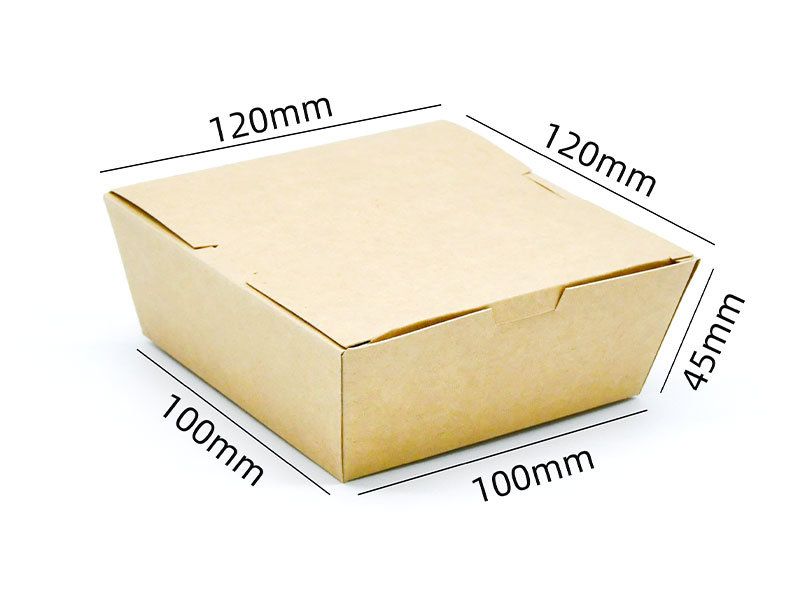
In a world where first impressions matter, the 100#S Paper Clamshell Takeout Box offers a clean, min...
See Details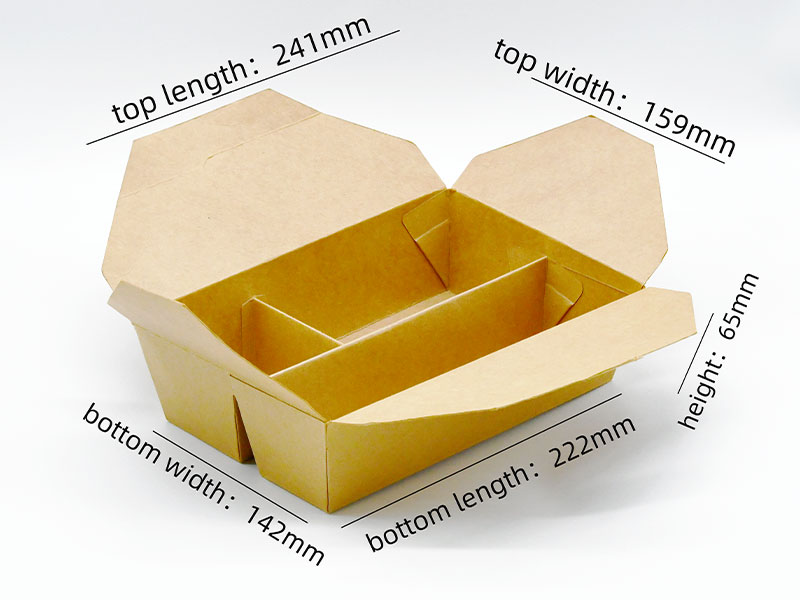
The L222 Deep-Well Three-Compartment Paper Clamshell Box stands out for its taller profile, with a 6...
See Details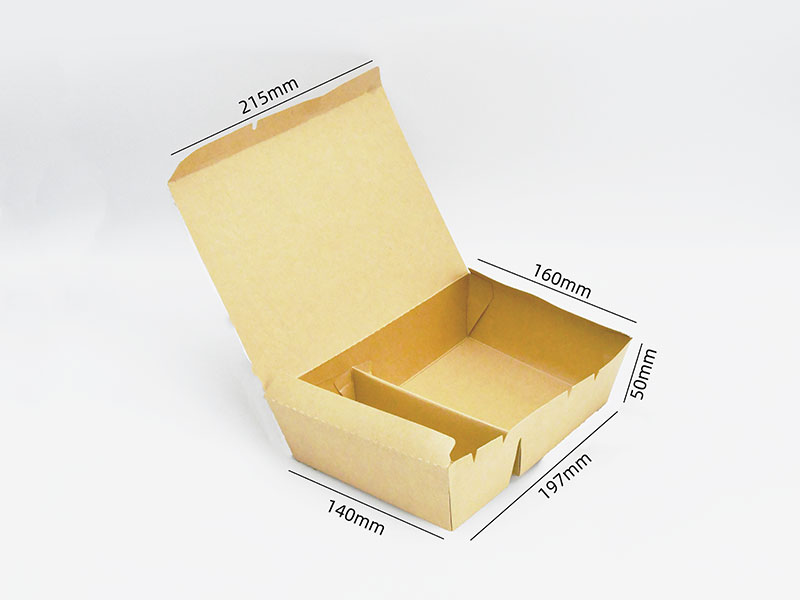
The L197 Space-Efficient Two-Compartment Paper Clamshell Takeout Box is built for meals that benefit...
See Details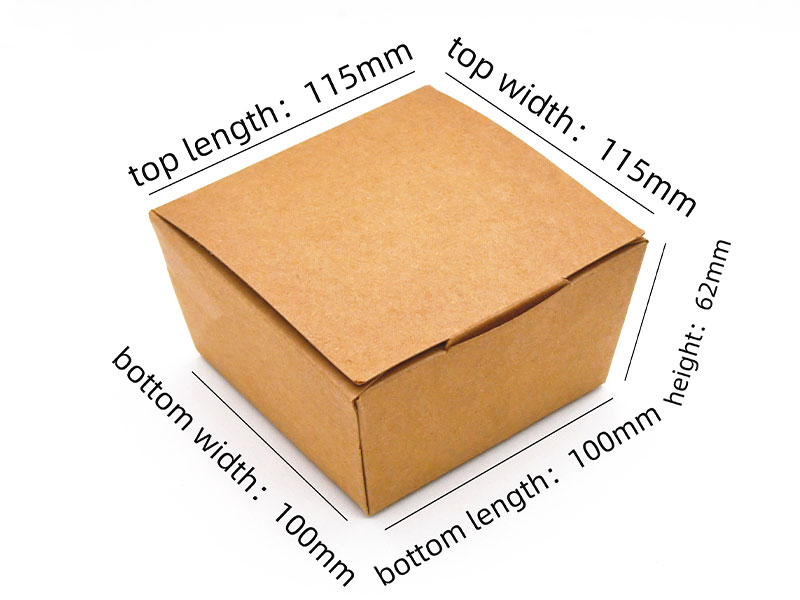
In the fast-moving food industry, packaging needs to be as smart and efficient as the businesses it ...
See Details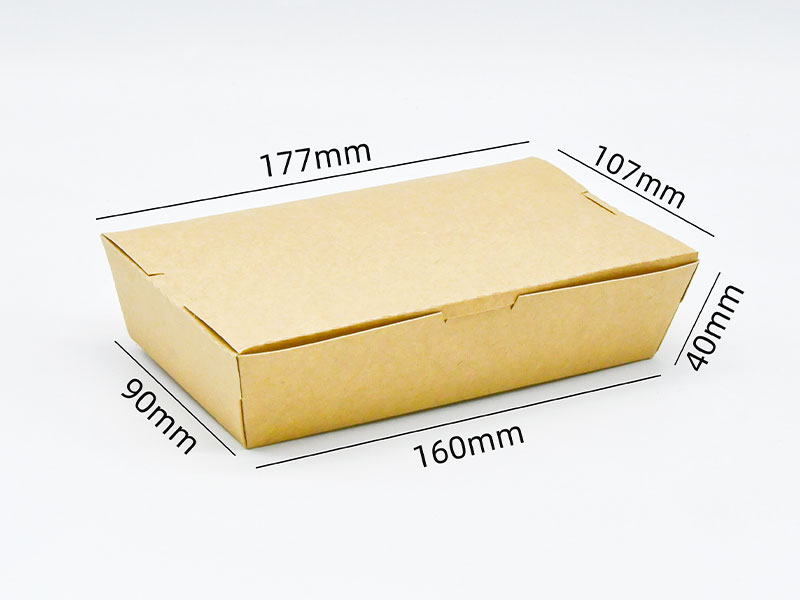
Dual-Use Kraft Paper Salad & Burger Box is a versatile, smartly designed packaging solution that...
See Details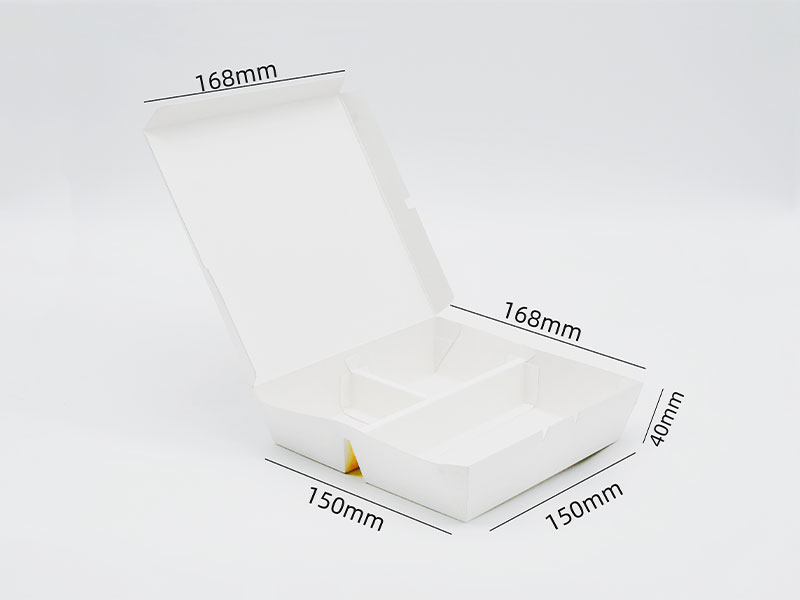
The L150 Square Three-Compartment Paper Clamshell Box is designed for meals that need three distinct...
See Details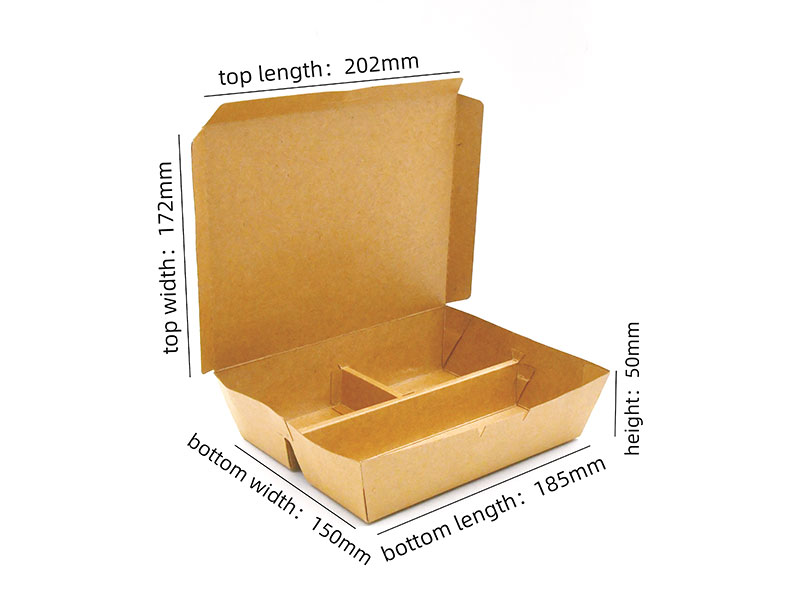
The L185 Sturdy Three-Compartment Paper Clamshell Takeout Box offers a larger, rectangular footprint...
See DetailsPackaging With Purpose
At Ruihe Sheng, we are committed to creating truly compostable, renewable, and low-carbon paper packaging solutions. From material selection to production processes, we fully practice the concept of sustainability - using FSC certified paper materials, plant-based ink and innovative algae coatings, and supporting solar energy systems and zero wastewater treatment facilities in the production process. We also actively participate in the European Industrial Composting Network, supporting brands to achieve green packaging implementation worldwide. Paper Food Containers Factory and Food Grade Paper Packaging Manufacturer in China.
contact details
Address: No. 330 Jingyang South Road, Qingyang Town, Wuxi City, Jiangsu Province
TEL: +86 0510 86510905
Whatsapp: +1 6477091788
news
If You Are Interested In Our Products, Please Consult Us
