
 عربى
 English
 Español
 Français

The L205A Large-Capacity Three-Compartment Paper Clamshell Takeout Box is built for hearty, family-s...
See DetailsDate:Nov 05, 2026
Content
Biodegradable clamshell packaging is often described as a simple swap for plastic, but the real decision is more practical. A clamshell has to hold food, survive delivery, look presentable, and fit the waste system where your customer lives. For foodservice teams, the useful question is not only "Is it biodegradable?" but "Which fiber box gives the right barrier, strength, and end-of-life story for this menu?" This guide walks through the choices we see most often in real packaging projects.
A paper-based clamshell begins with fiber, usually food-grade paperboard. The fiber source matters, but so do the coating, ink, and closure design. At Ruihesheng, we work with FSC-certified paper, plant-based inks, and seaweed-based coatings. These choices can improve the environmental profile, yet they must still be matched to the food, the oven or microwave, and the composting route available to the end user.
It helps to separate two common words. "Biodegradable" means a material can break down through natural processes, but it does not say how quickly or under what conditions. "Compostable" is more specific: it means the item meets a defined standard in a defined environment, often industrial composting. A paper clamshell with a thin coating may behave differently from an uncoated one, and food residue can change the result. That is why a responsible supplier should talk about the exact SKU, coating, and certification rather than making a broad claim for every box.
For buyers, the practical takeaway is simple: ask for the material breakdown, the intended disposal route, and any certificates for the specific product. If home composting is important, check whether the item has been tested for that path. If industrial composting is the target, confirm that the local facility accepts food-soiled paper packaging. The box can be a good fit, but only when the claim and the waste stream line up.
Biodegradable clamshells are not one product. A box for a dry pastry has different demands from a box for a saucy noodle dish. The table below compares common paper clamshell approaches by menu fit, not by laboratory ranking.
| Paper clamshell option | Best suited to | What to check |
|---|---|---|
| Uncoated or lightly coated paperboard | Dry foods, bakery items, wraps, low-moisture meals | Grease marks, crumb release, and whether the board feels sturdy when lifted |
| Plant-based or seaweed-coated paperboard | Burgers, grain bowls, chilled deli items, light sauces | Grease and moisture resistance, coating coverage, and compostability evidence for the exact SKU |
| Multi-compartment paper clamshell | Combo meals, bento-style plates, mixed sides | Seam leaks, hinge strength, and whether compartments stay separate during transport |
| Heavy-duty paper clamshell | Larger portions, catering, stacking, delivery | Board weight, lid fit, venting, and stack stability under real load |
The right choice usually comes from a short trial. Fill the box with the actual meal, close it, stack it, and let it sit for the delivery window. A sample that looks good empty can behave very differently with heat, oil, or condensation inside.
Start with the food, not the catalog. The same clamshell style can be excellent for one dish and frustrating for another. These are the four questions we ask most often when matching a paper clamshell to a menu.
Chips, fried snacks, pastries, and toasted sandwiches need airflow more than heavy barriers. A simple paperboard clamshell with controlled venting can help reduce sogginess. Check the hinge and lock first, because a box that pops open in the bag loses its benefits quickly.
Curries, saucy rice, marinated meats, and dressings put pressure on seams and corners. Look for a leak-resistant construction and a coating that suits the fat content of the dish. A two-compartment design can also keep wet and dry items apart, which protects texture and presentation.
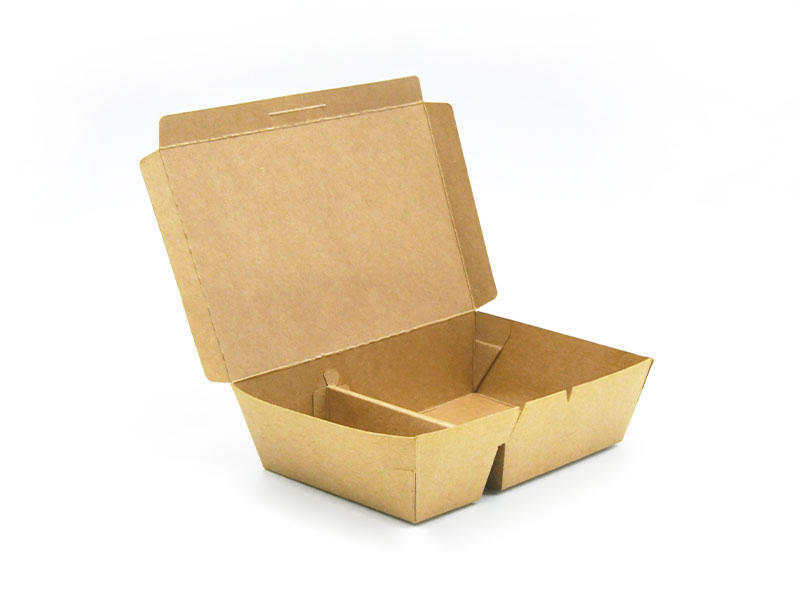 L170 900ml Two-Compartment Paper Takeout BoxFor takeout meals needing separation, the L170 offers two side-by-side compartments and 900ml capacity, with bulk packing details listed.View Product →
When a meal has a main, a side, and a sauce, compartments do more than organize the food. They reduce mixing, limit sogginess, and make the pack easier to serve. A three-compartment paper clamshell is a practical middle ground for restaurants that change specials often but want one dependable box family.
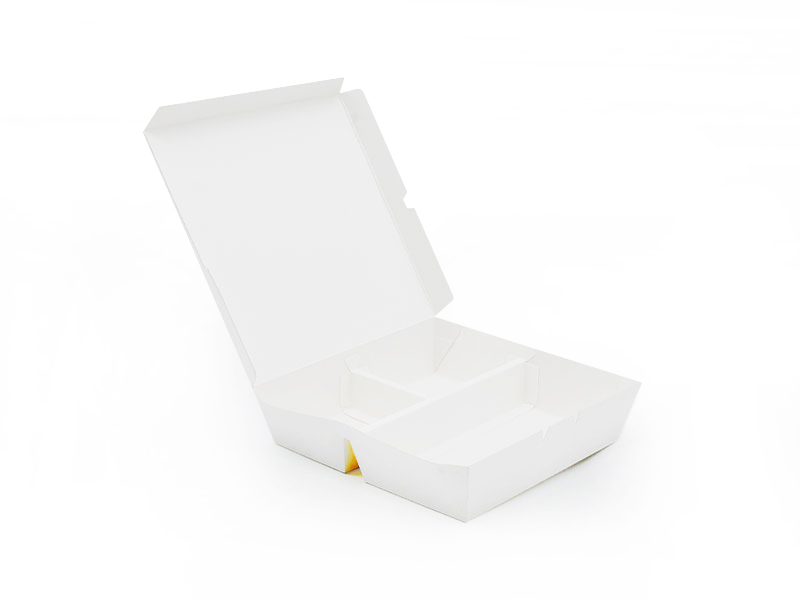 L150 700ml Square Three-Compartment Paper ClamshellA three-compartment square clamshell for separating main, side, and sauce in takeout meals; 700ml capacity and bulk packing details are listed.View Product →
Only use a clamshell in the microwave when the product is specifically rated for it. Coating, board thickness, and venting all affect performance. For teams serving meals that customers reheat at home or in the office, choose a microwave-available option and test it with the real dishes, including oily and tomato-based foods.
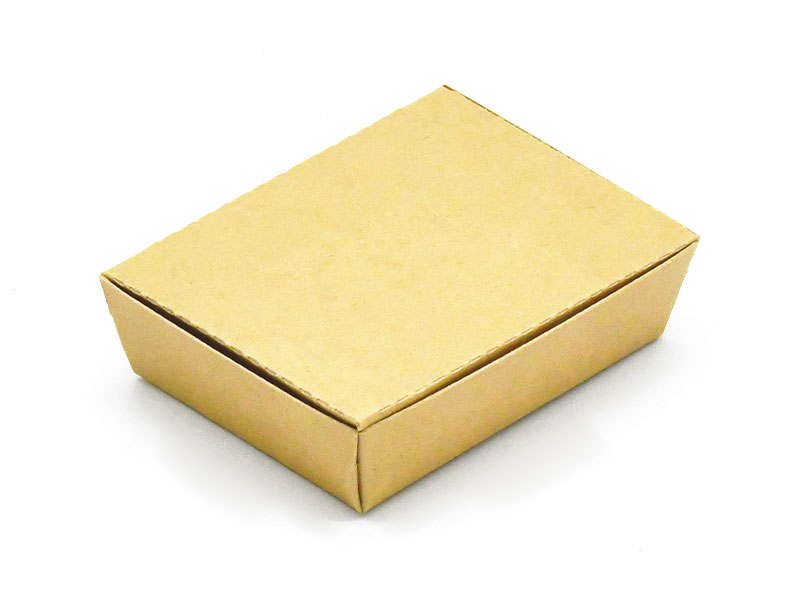 105# 300ml Microwavable Paper Clamshell Food BoxA 300ml microwavable paper clamshell for compact takeout portions; check the listed dimensions and bulk packing when comparing packaging options.View Product →
A clamshell is also a small billboard. A clean print, a well-placed logo, and a readable food safety message can make a takeaway meal feel more considered. Our production lines include flexographic and UV printing, die-cutting, automatic gluing, and foil stamping, so artwork can be adapted to the board and coating rather than forced onto it. One caution from experience: colors can shift on uncoated or lightly coated paper, and heavy ink coverage can affect how the box folds. Always approve a printed sample under the same lighting your customers will see.
Environmental claims need manufacturing discipline behind them. We operate under ISO 9001 and ISO 22000 systems and hold FSC, BRC, SGS, SABER, and related credentials. Our factory uses FSC-certified paper, plant-based inks, and seaweed-based coatings, and it participates in a European industrial composting network. These are useful signals, but they are not a substitute for checking the exact product specification, the coating, and the disposal instructions you plan to print on the pack. If you would like to see how production is organized, our factory page gives a closer view of the equipment and quality controls.
For end-of-life messaging, keep it clear and honest. Tell customers whether the box is suitable for industrial composting, home composting, or general recycling in their area. Avoid vague green imagery that suggests a disposal route the product cannot support. Clear instructions build more trust than a bold claim ever will.
Biodegradable clamshell packaging works best when it is treated as a system: the right fiber, the right barrier, the right shape, and the right end-of-life message. If you are comparing options for a menu launch or a packaging switch, our team can help you narrow the range and test samples with your actual dishes. You can reach us through the contact page.
Recommended Articles

The L205A Large-Capacity Three-Compartment Paper Clamshell Takeout Box is built for hearty, family-s...
See Details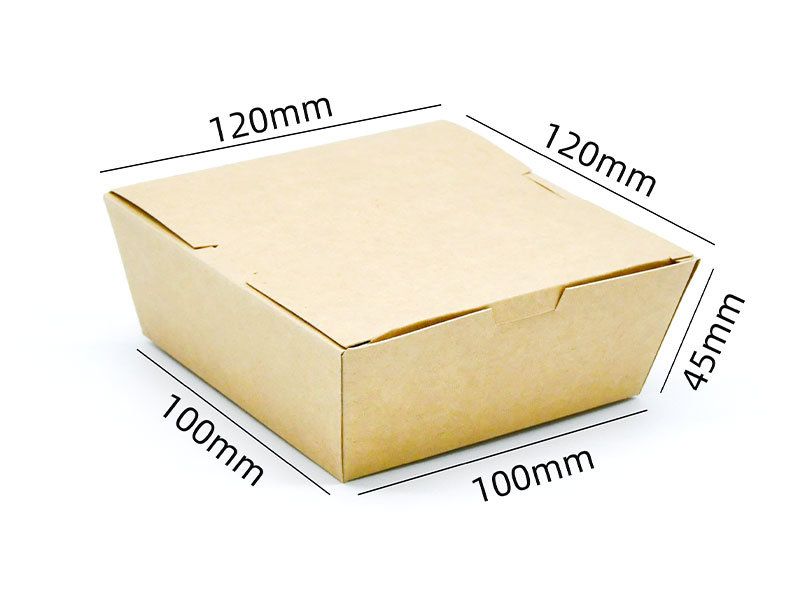
In a world where first impressions matter, the 100#S Paper Clamshell Takeout Box offers a clean, min...
See Details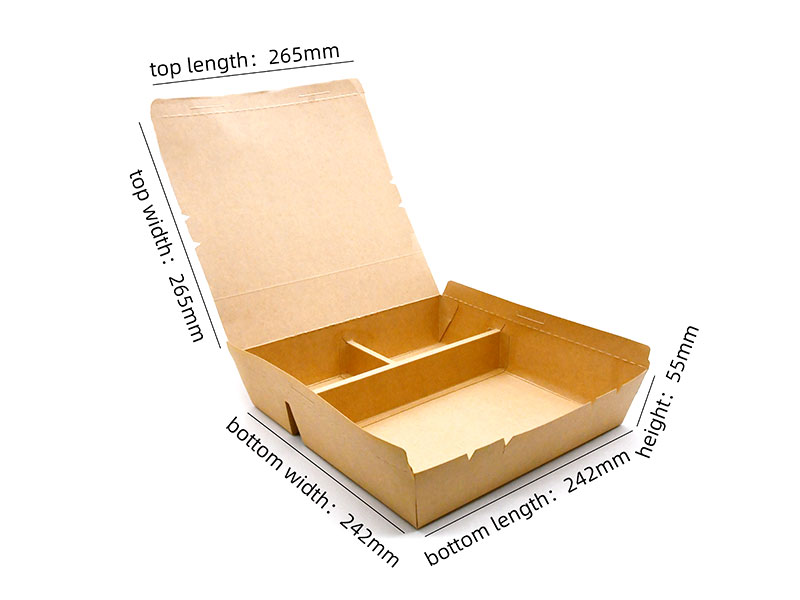
The L242 Feast-Size Square Three-Compartment Paper Clamshell Box is the largest format in Ruihesheng...
See Details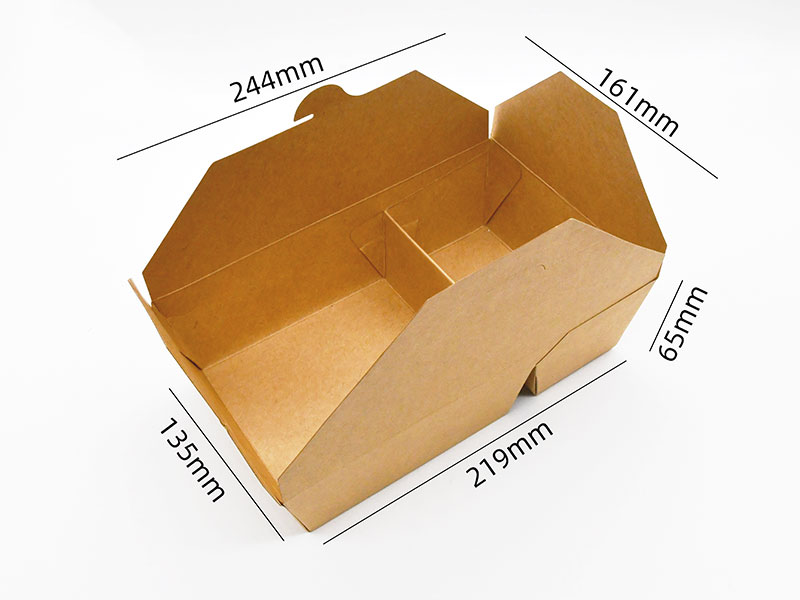
The L219 Double-Lock Two-Compartment Paper Clamshell Box is engineered around a secure double-notch ...
See Details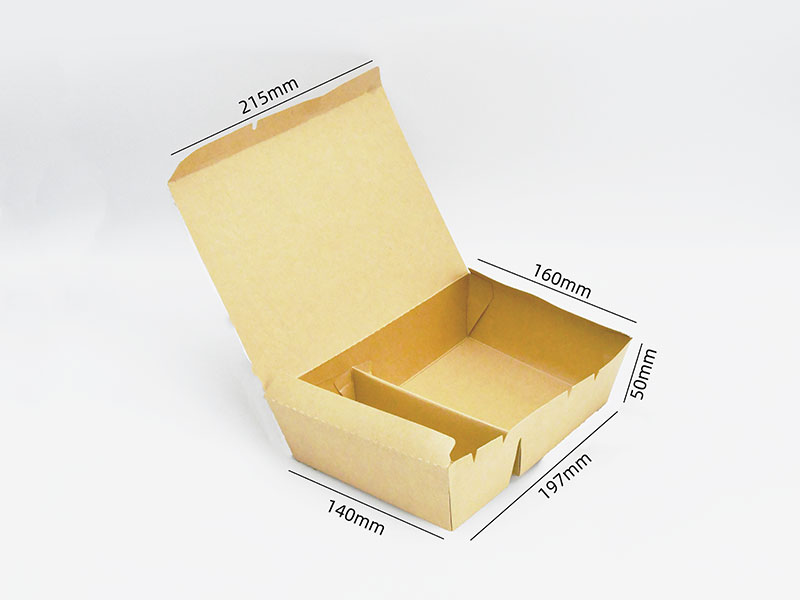
The L197 Space-Efficient Two-Compartment Paper Clamshell Takeout Box is built for meals that benefit...
See Details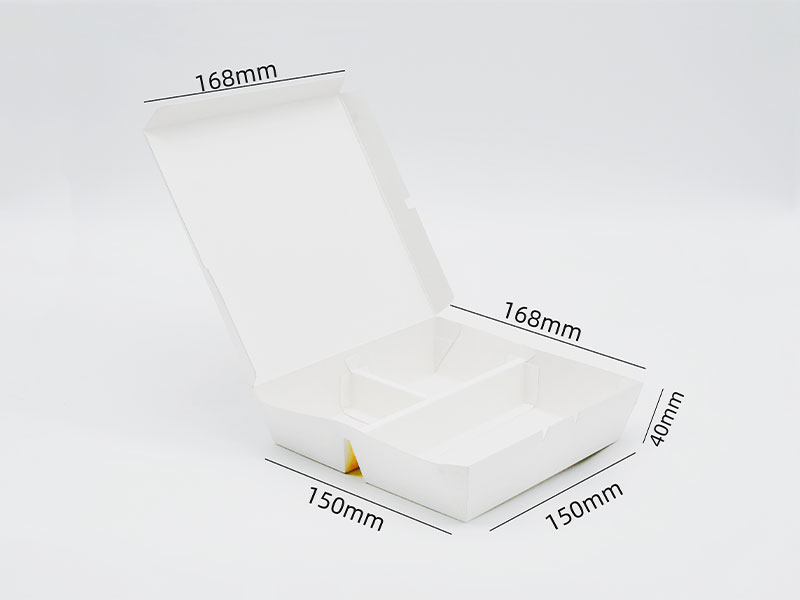
The L150 Square Three-Compartment Paper Clamshell Box is designed for meals that need three distinct...
See Details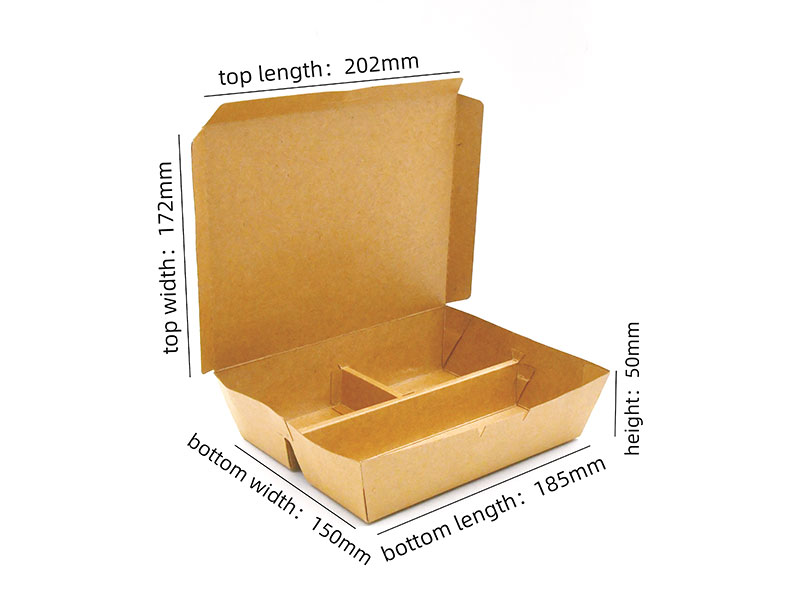
The L185 Sturdy Three-Compartment Paper Clamshell Takeout Box offers a larger, rectangular footprint...
See DetailsPackaging With Purpose
At Ruihe Sheng, we are committed to creating truly compostable, renewable, and low-carbon paper packaging solutions. From material selection to production processes, we fully practice the concept of sustainability - using FSC certified paper materials, plant-based ink and innovative algae coatings, and supporting solar energy systems and zero wastewater treatment facilities in the production process. We also actively participate in the European Industrial Composting Network, supporting brands to achieve green packaging implementation worldwide. Paper Food Containers Factory and Food Grade Paper Packaging Manufacturer in China.
contact details
Address: No. 330 Jingyang South Road, Qingyang Town, Wuxi City, Jiangsu Province
TEL: +86 0510 86510905
Whatsapp: +1 6477091788
news
If You Are Interested In Our Products, Please Consult Us
