
 عربى
 English
 Español
 Français

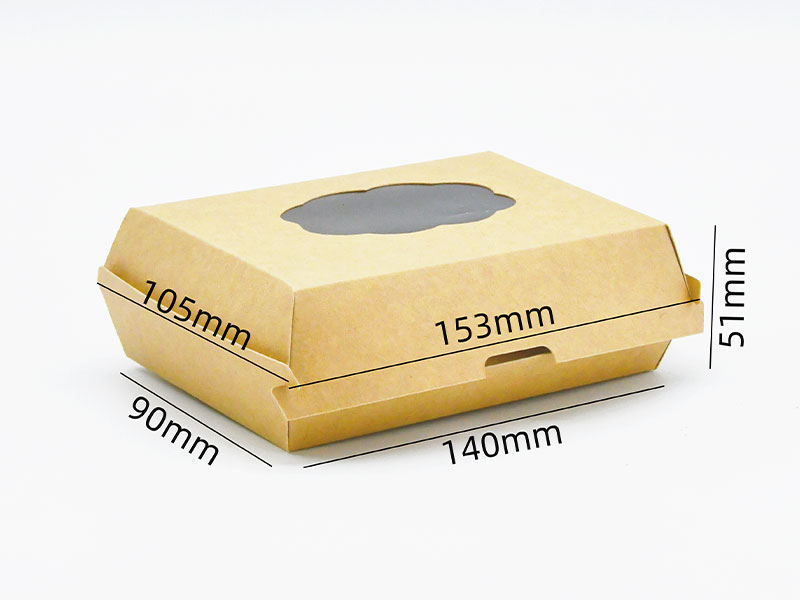
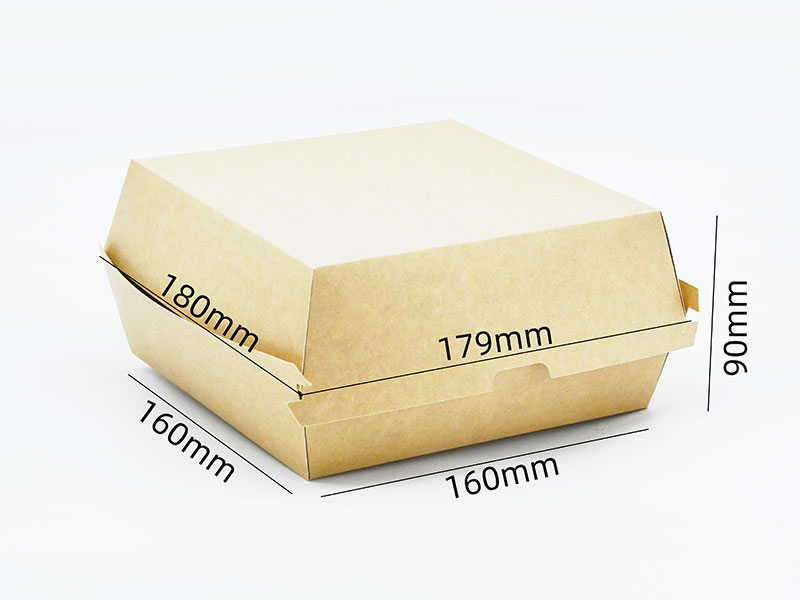
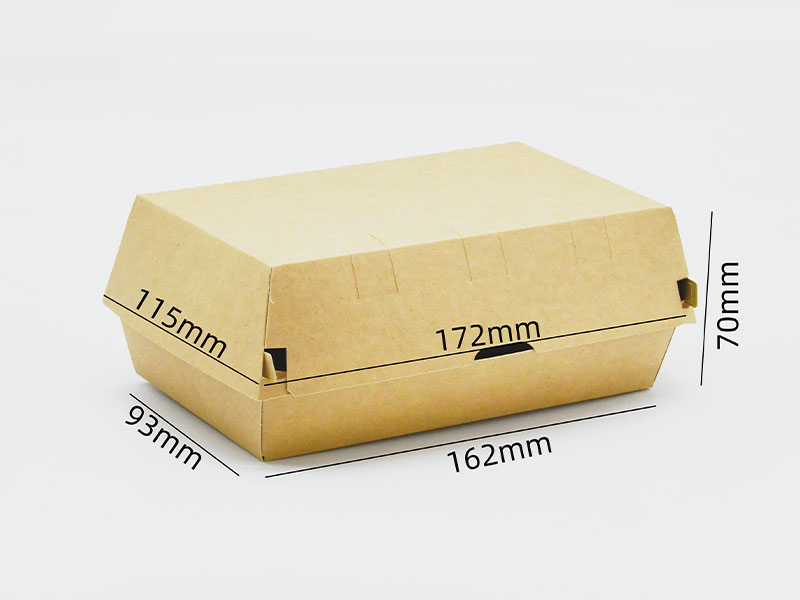
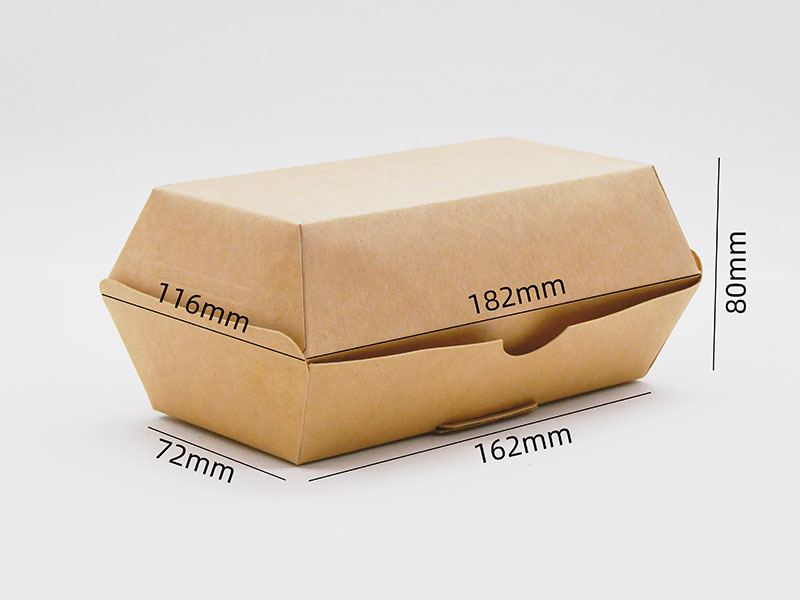
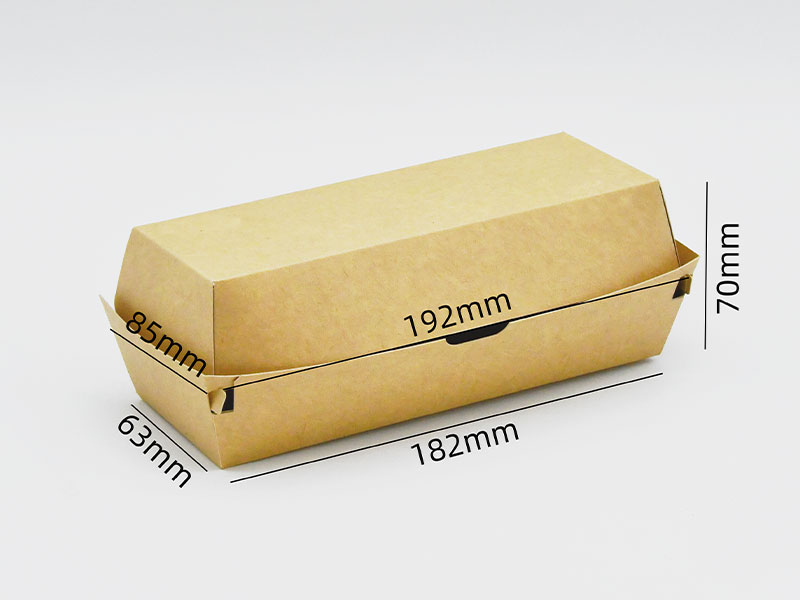

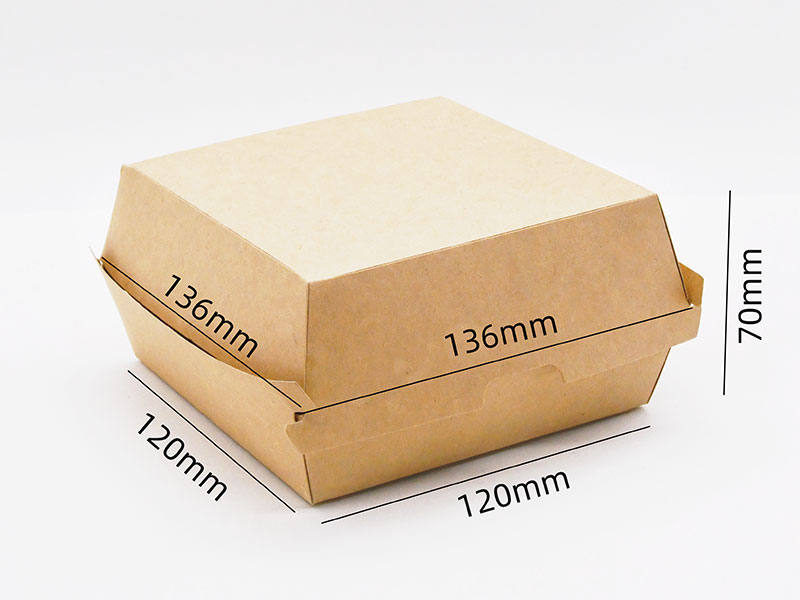

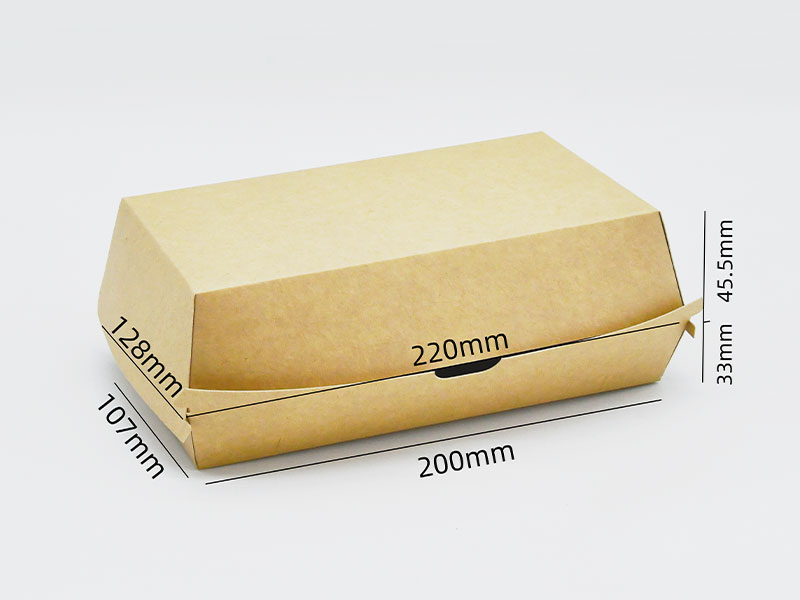
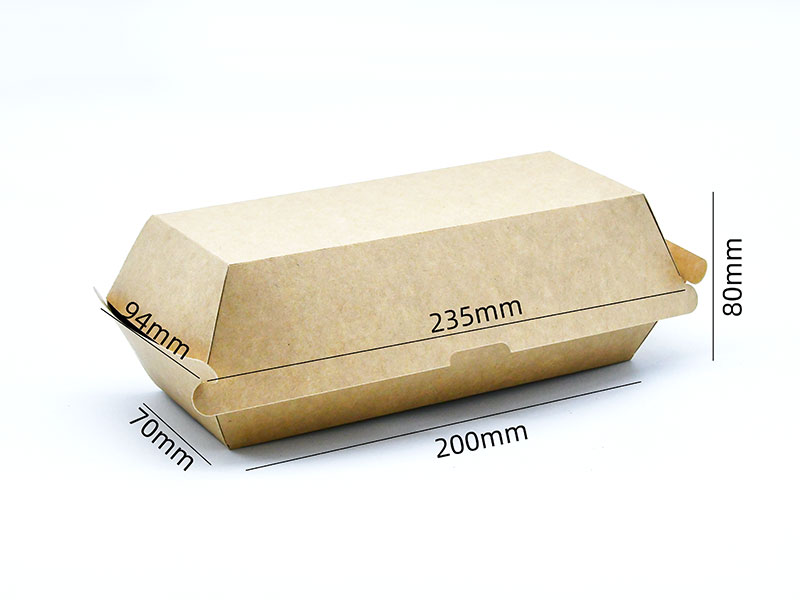

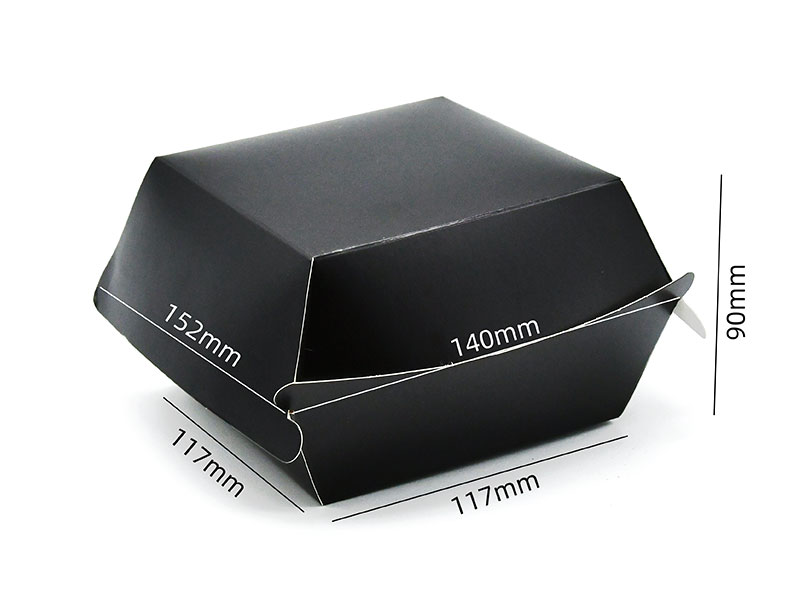
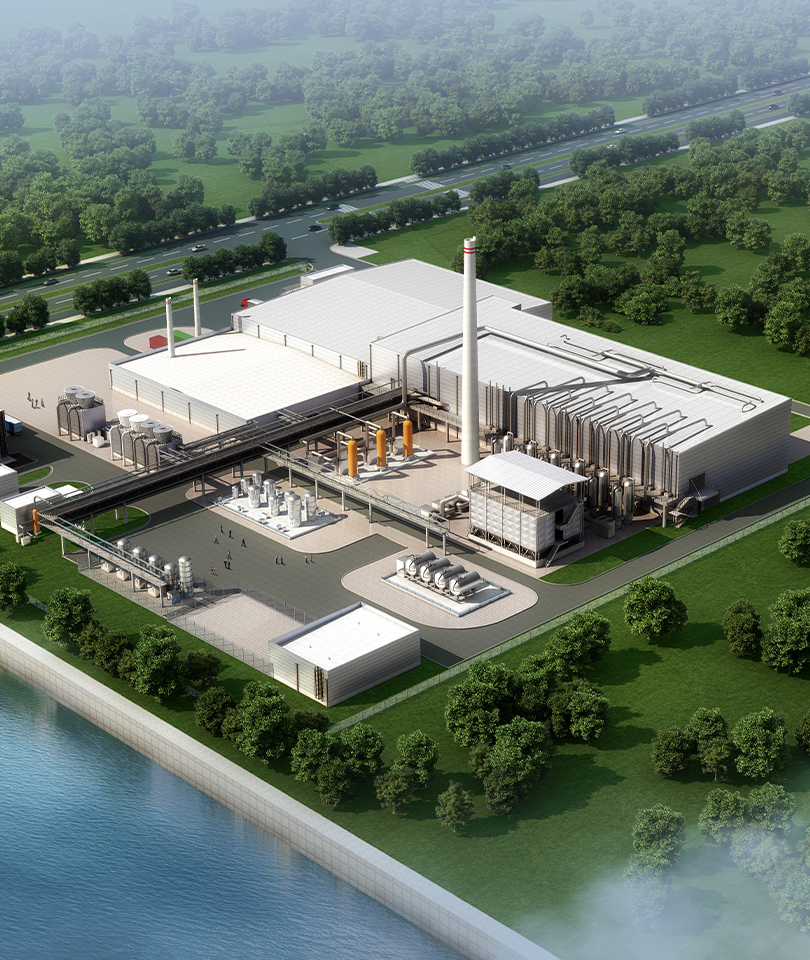



Jiangyin Ruihesheng Paper Products Co., Ltd. manufactures clamshell food paper boxes and a wider family of food-grade paper packaging at our 15,000 m² production base in Wuxi, Jiangsu Province. Since 2004 we have built fold-and-lock paperboard containers for takeout, delivery and dine-in programmes, and every clamshell we quote is engineered around the meal it has to carry: fill capacity, closure behaviour, grease and heat performance, and the print surface left for your brand. As a CLAMSHELL FOOD PAPER BOX manufacturer, we run board selection, die-making, printing, forming, gluing and finished-goods inspection inside the same plant.
Our Clamshell Food Paper Box Range
The range is organised by structure rather than by one standard size, because the same menu item can be packed in more than one format. We hold tooling across four families and can adapt an existing die or cut new tooling for a specific footprint.
| Product family | Structure and closure | Capacity range we build | Typical application |
|---|---|---|---|
| Basic / Simple Food Paper Box | Single-wall fold-and-tuck, lightweight board | Compact snack and pastry formats | Cafés, bakeries, fried snacks, high-volume budget takeout |
| General Clamshell Food Paper Box | Hinged lid with secure re-close; quick-lock, two-way buckle and double-locking variants | 300 ml – 1000 ml (100#S 400 ml, 105# 300 ml, 140#M 1000 ml) | Fried food, burgers, salads, desserts, delivery |
| Multi-Compartment Clamshell Food Paper Box | Two- and three-grid dividers, leak-resistant base, microwaveable options | 700 ml – 2300 ml (L150 700 ml to L242 2300 ml) | Bento, combo meals, curated meal sets, catering |
| Burger Box | Dedicated burger footprint, kraft or white board | Single and stacked burger formats | QSR chains, burger delivery, food trucks |
Multi-compartment work is where most custom requests begin: the MULTI-COMPARTMENT CLAMSHELL FOOD PAPER BOX family covers two- and three-grid layouts from 700 ml to 2300 ml with leak-resistant bases and microwaveable board grades. For burger programmes, the BURGER BOX uses a shorter print panel and a flatter lid than a general clamshell.
Application Fit by Menu Type
Clamshell construction suits menus where food is loaded hot and eaten within a short window, and where the pack has to survive a delivery bag without losing its shape.
- Fried chicken, wings, chips and snacks: grease-resistant board, ventilated stacking and quick-lock closure.
- Burgers and sandwiches: flat base, low lid height, kraft or white board, optional window panel.
- Salads, desserts and cold plates: leak-resistant base seam and secure re-close for transport.
- Bento and combo meals: two- and three-compartment dividers from 900 ml to 2300 ml.
- Delivery and food trucks: stackable, space-saving storage and closures that stay shut in a bag.
- Heavier portions: our HEAVY DUTY FOOD PAPER BOX range where board weight and load-bearing matter more than material economy.
Materials, Barrier and Sustainability Options
Board selection drives both pack performance and the compliance file behind it, so we confirm the material at the same time as the die.
- FSC certified paperboard and post-consumer recycled pulp.
- Plastic-free barrier construction without PE or PLA coating, using algae-based barrier technology for grease and moisture.
- TÜV-certified industrial composting for qualifying structures, with biodegradable labels and adhesives.
- Plant-based and water-based inks; kraft, white and coated board grades.
- Microwaveable and freezer-friendly options where the structure and barrier allow.
- Recyclable construction across the standard clamshell range.
Critical Specifications We Confirm Before Tooling
These are the variables that decide whether a clamshell performs on the line and in the customer's hands.
- Nominal capacity in ml and the usable fill level below the lid.
- External and internal dimensions, lid height and base depth.
- Board grade, caliper and stiffness for the intended load.
- Closure type: quick-lock, two-way buckle, double-locking or tuck.
- Grease resistance and leak behaviour at the base seam and corners.
- Heat resistance and microwave suitability for the serving method.
- Stacking stability and ventilation where fried food must stay crisp.
- Window or cut-out requirements and their effect on panel strength.
Printing and Surface Finishing
Print is planned together with the die, because panel geometry limits what can be placed on the lid, base and side walls.
- Flexographic and UV printing on single or double sides.
- Spot colour and four-colour process work.
- Hot stamping, partial UV, embossing and laminating for premium programmes.
- Water-based ink systems for food-contact-adjacent packaging.
Production Flow and Quality Control
Production follows ten controlled stages: raw material procurement, incoming material inspection, paper cutting, die-cutting and forming, printing, die cutting and moulding, bonding and assembly, finished-goods inspection, packaging, and warehousing and logistics. Incoming board, laminating material and ink are inspected against production standards before release to the line.
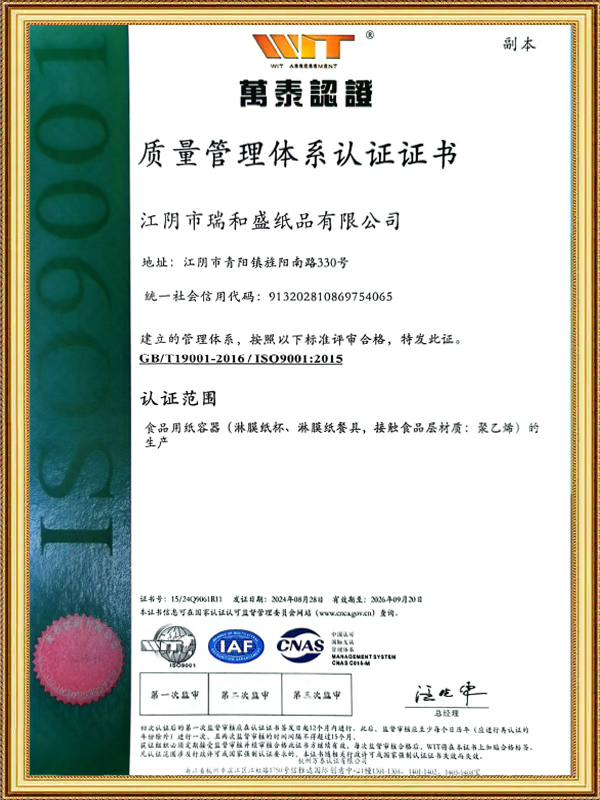
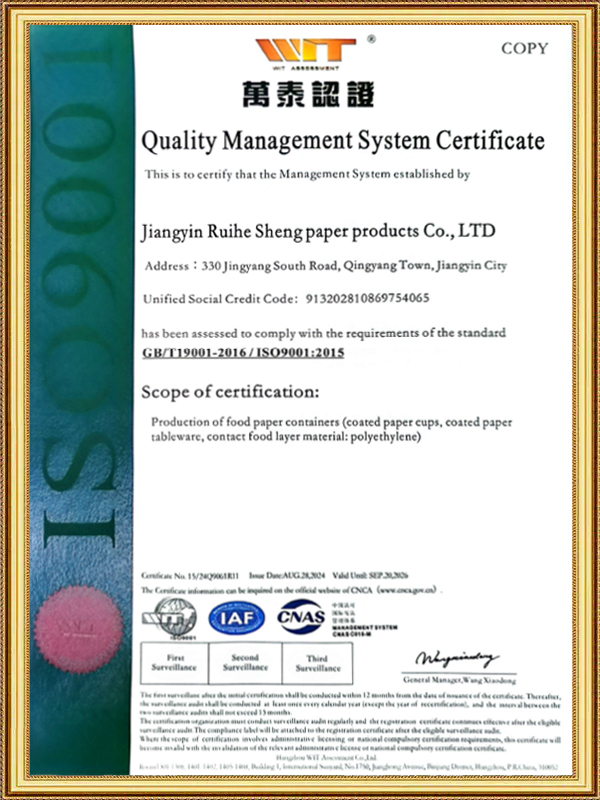
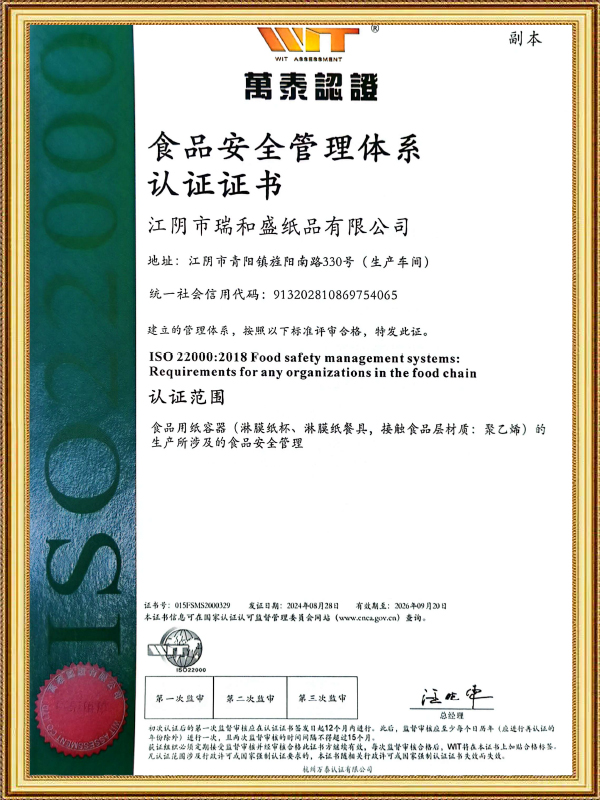
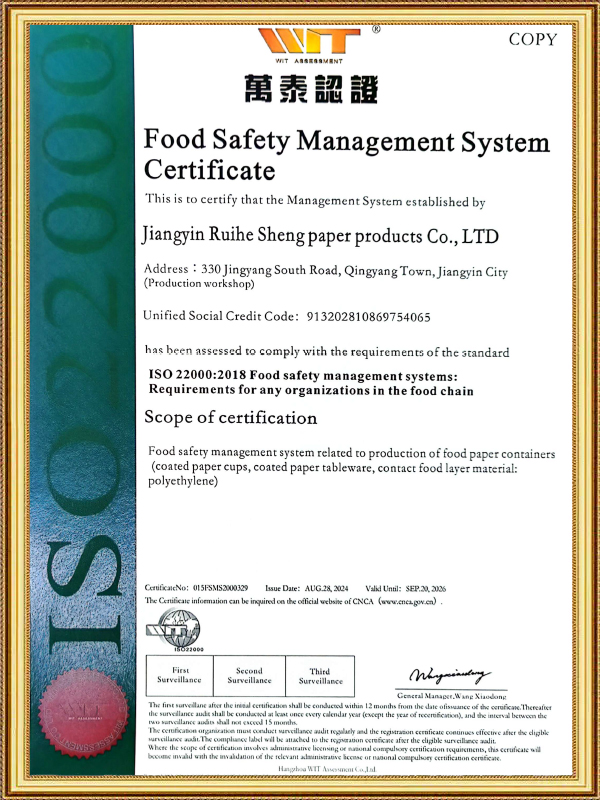
Finished-goods inspection checks dimensions, strength and print quality against the approved sample, and procedural controls keep quality traceable from batch to batch. Our operations are certified to ISO9001, ISO22000, FSC, BRC and SGS, and we hold international accreditations including SABER, SYDEX, IAF and CNAS. Products are exported to the USA, France, Sweden, Japan, South Korea, Singapore and other markets.
Information We Use to Configure Your Solution
A clamshell quotation is only as good as the inputs behind it. This matrix shows what we need and what each item determines.
| Project input | What it determines | What to send us |
|---|---|---|
| Meal and food load | Board grade, base depth, closure strength | Menu item, approximate weight, hot or cold |
| Target capacity | Die size and compartment layout | Fill volume in ml, number of compartments |
| Barrier requirement | Barrier technology, seam and corner design | Grease, sauce, oil or moisture level |
| Heat profile | Microwave or heat-resistant grade | Serving temperature and reheating method |
| Print artwork | Panel layout, colour count, finishing | Logo files, brand colours, required panels |
| Order pattern | Tooling, packing and delivery planning | Annual volume, first order quantity, destination |
| Market requirements | Documentation and compliance evidence | Destination country, labelling and compliance needs |
Packaging, Delivery Scope and Documentation
- Nested cartons with polybag-free packing options for qualifying orders.
- Palletising, carton marking and container loading plans matched to the order.
- Approved pre-production samples and artwork proofs before mass production.
- Batch records supporting traceability from raw material to finished carton.
Frequently Asked Questions
What capacities do you manufacture in clamshell food paper boxes?
General clamshell boxes run from 300 ml to 1000 ml, multi-compartment clamshell boxes from 700 ml to 2300 ml, and the basic/simple family covers compact snack and pastry formats. We match the capacity to the actual fill level rather than to a nominal figure alone.
Can clamshell boxes handle hot, greasy or microwaved food?
Yes, for qualifying grades. We supply grease-resistant board, leak-resistant base seams, and heat-resistant and microwaveable options such as the 105# 300 ml and the L152 two-way buckle boxes. Serving temperature and reheating method are confirmed before the board is fixed.
Are your clamshell boxes plastic-free and compostable?
Standard constructions use FSC certified board and post-consumer recycled pulp with no PE or PLA coating, relying on algae-based barrier technology instead. Qualifying structures carry TÜV-certified industrial composting, and we use biodegradable labels and adhesives.
Can we print our brand across the lid and base?
We print single or double sided using flexographic and UV presses, in spot colour or four-colour process, and can add hot stamping, partial UV, embossing or laminating. Panel layout is agreed with the die drawing so artwork sits correctly on every visible face.
What do you need to quote a custom clamshell?
Send the meal type and approximate weight, target fill volume, number of compartments, barrier and heat requirements, artwork or brand direction, annual and first-order volumes, and the delivery destination. With those inputs we can propose an existing die or specify new tooling and return a configuration with samples.
