
 عربى
 English
 Español
 Français

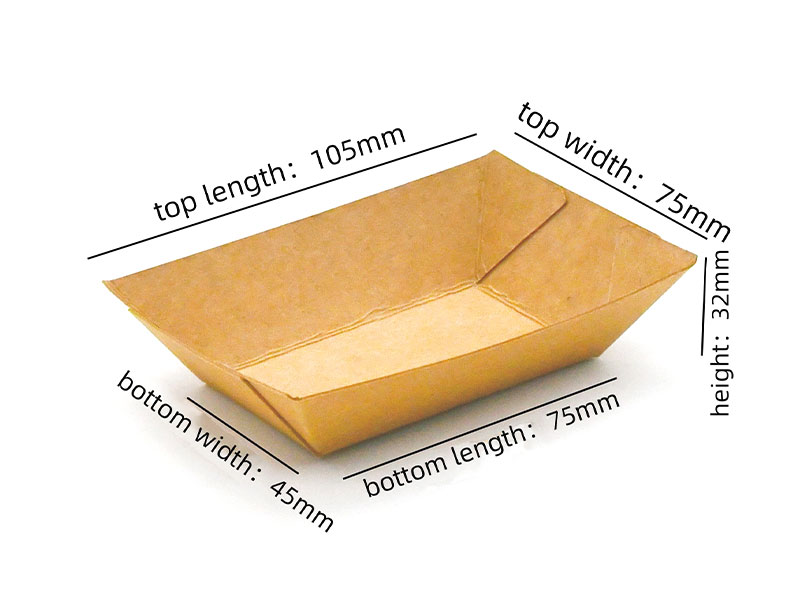
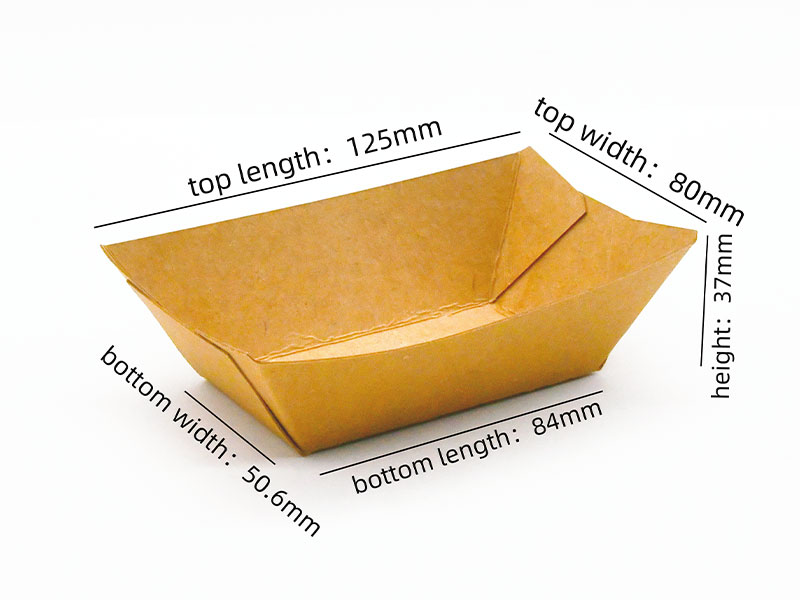
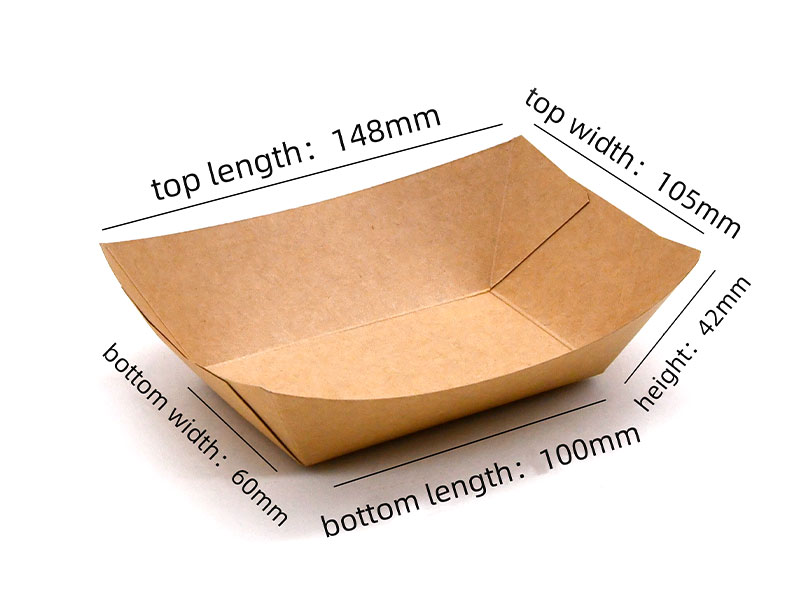
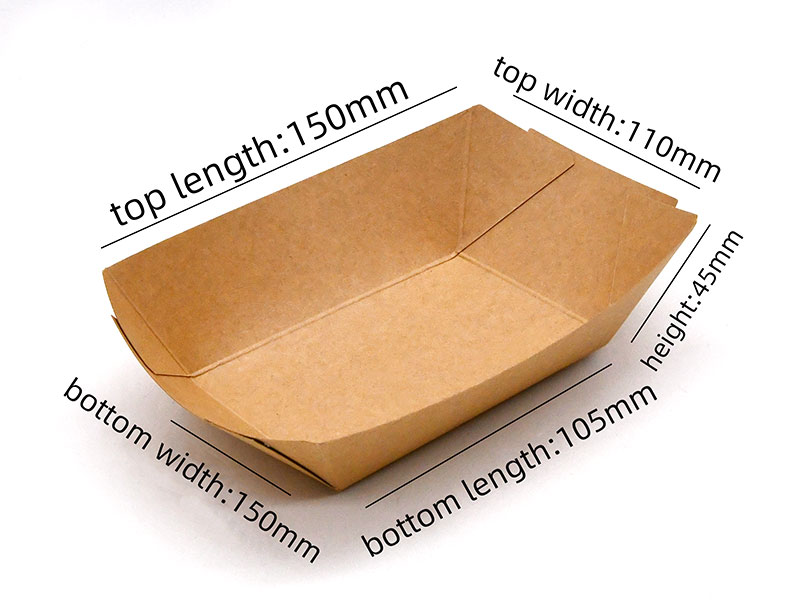
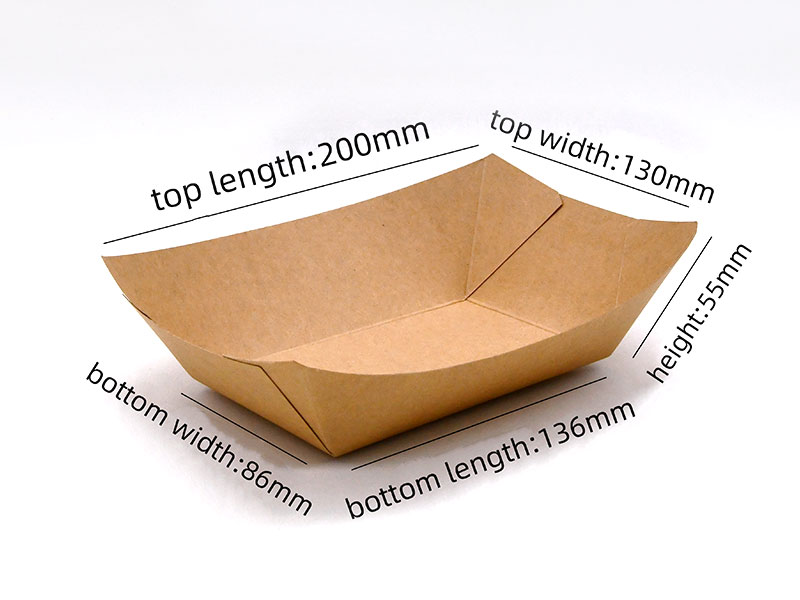
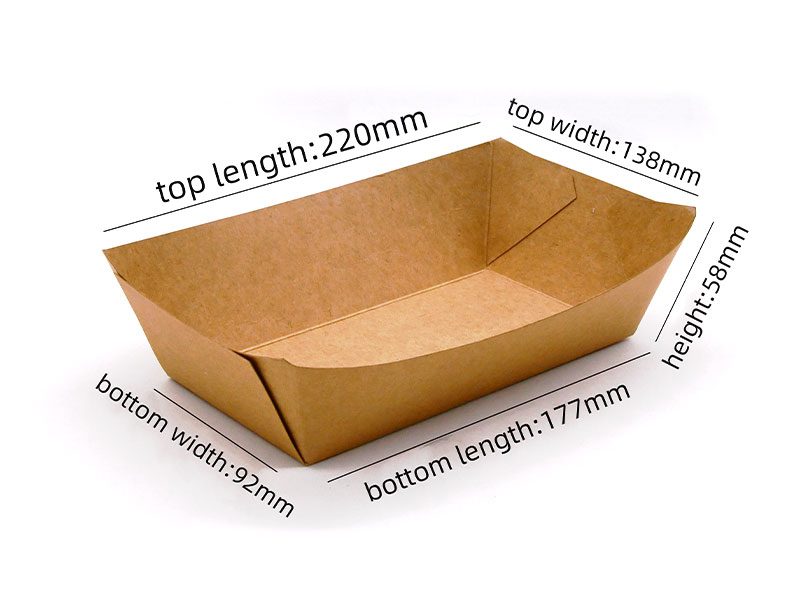
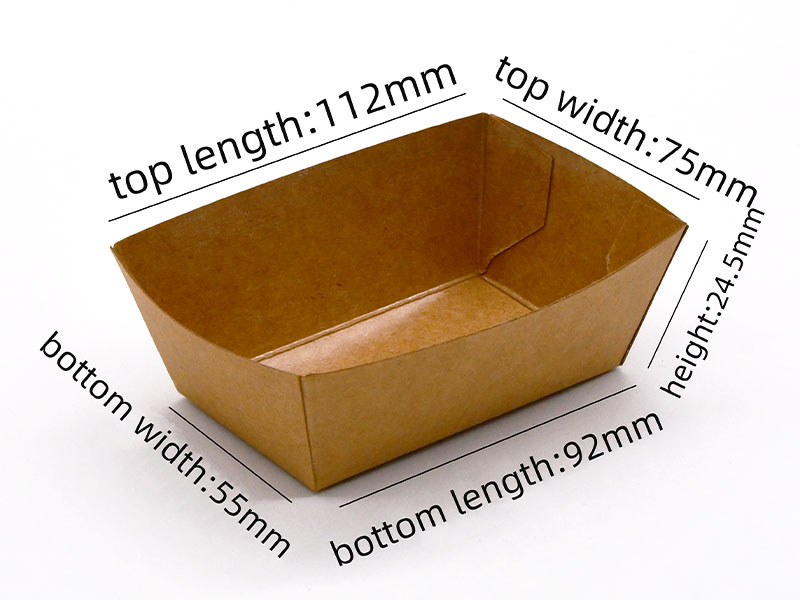
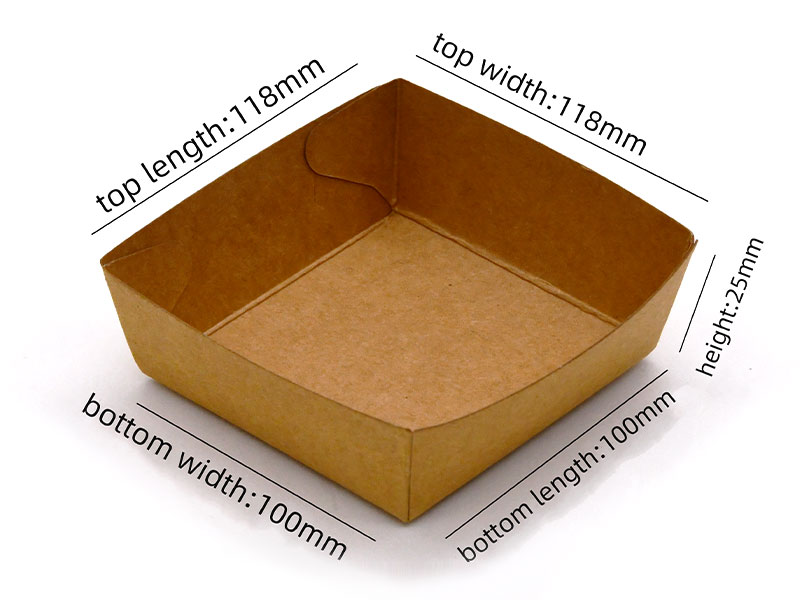
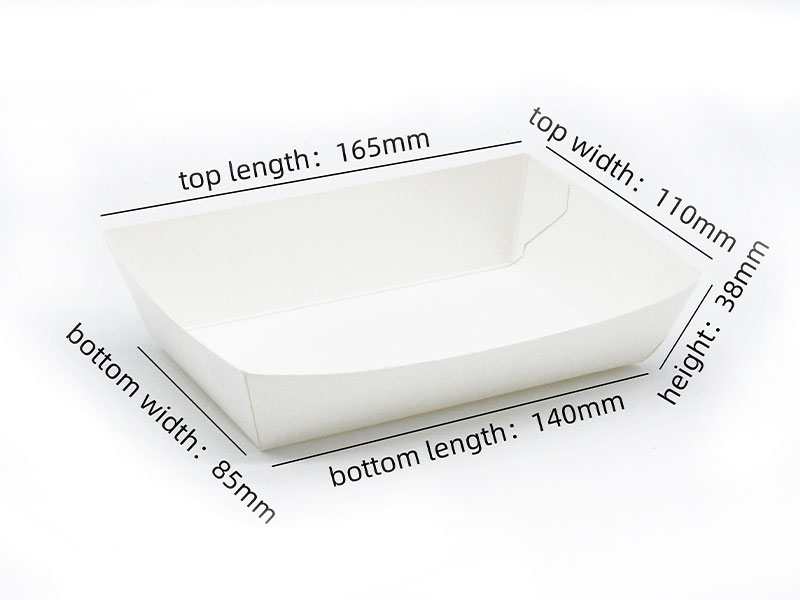
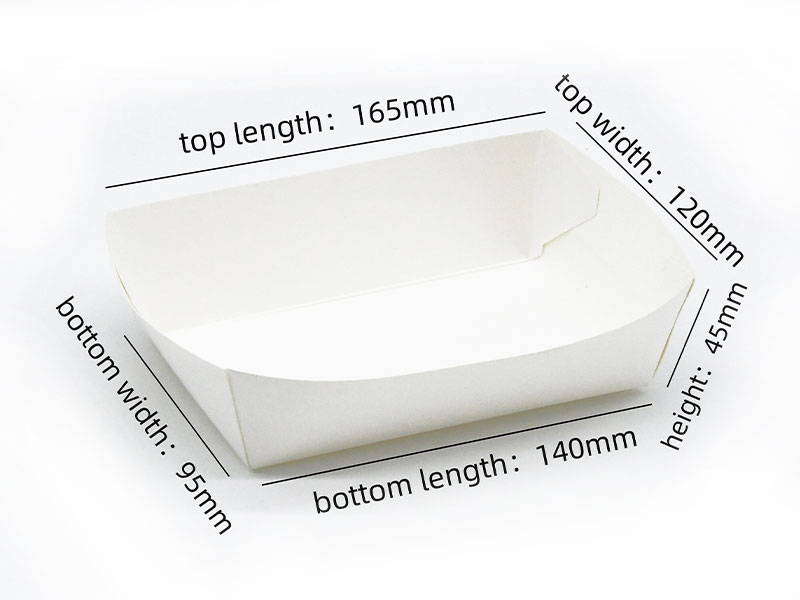
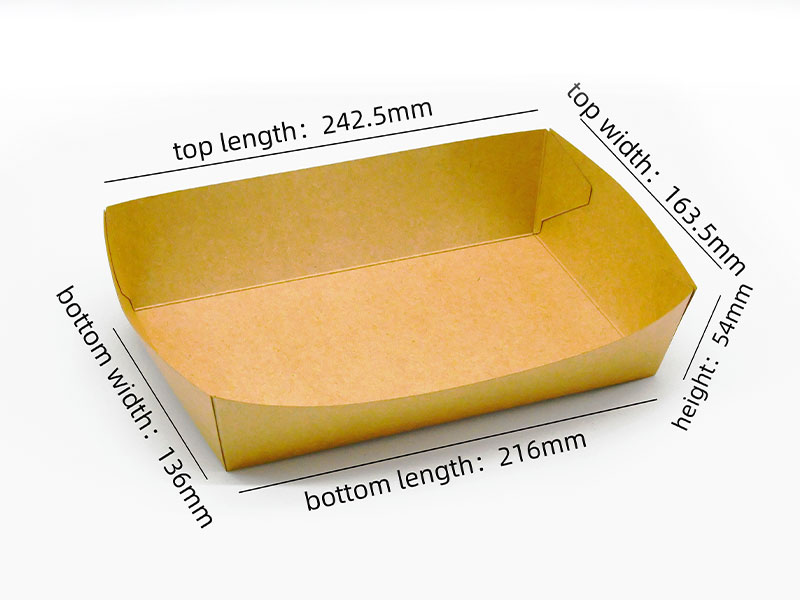
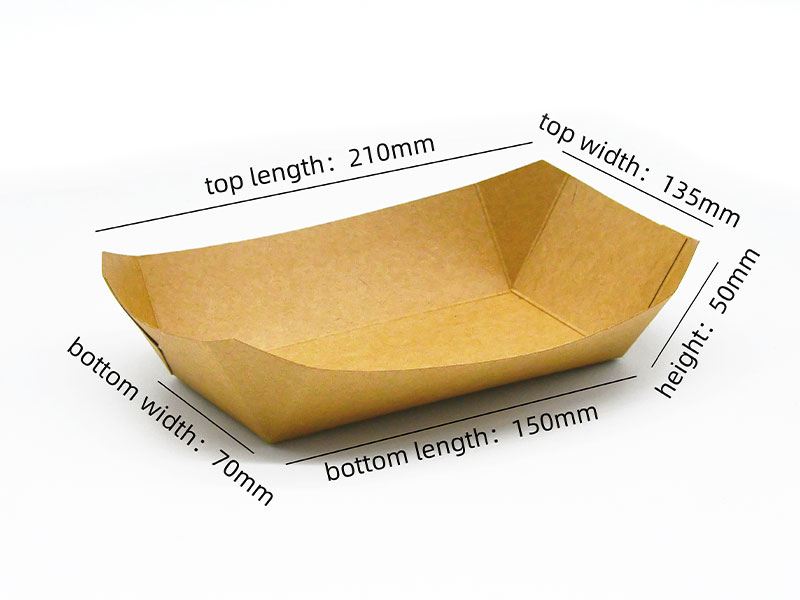
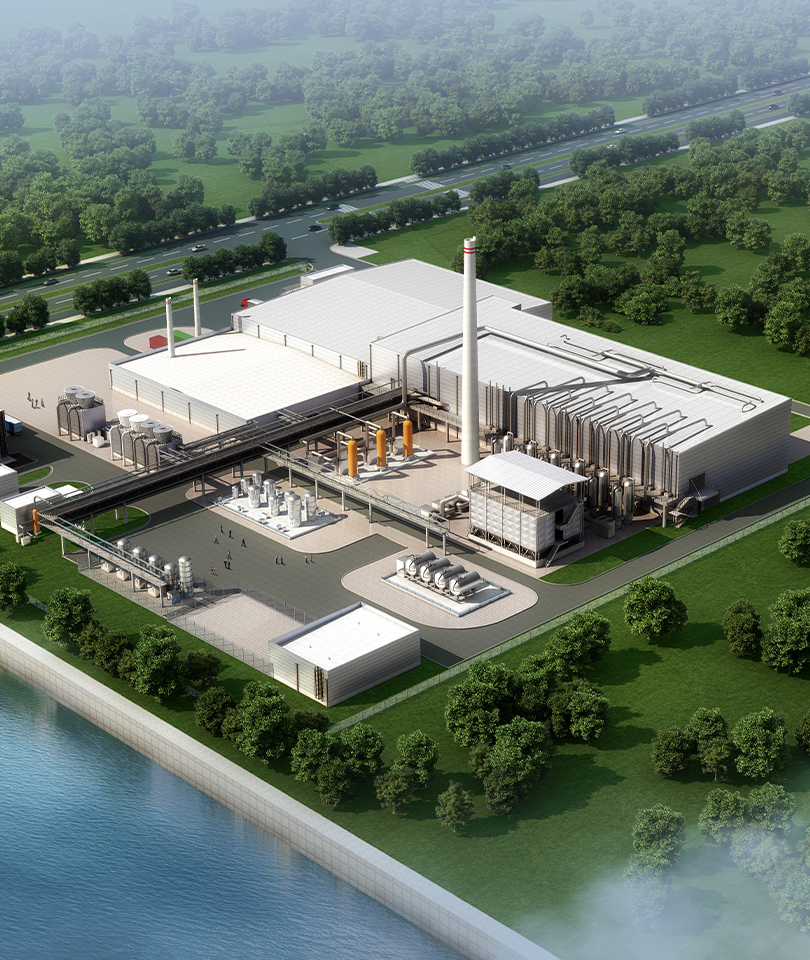



JIANGYIN RUIHESHENG PAPER PRODUCTS CO., LTD. is a BOAT SHAPE PAPER FOOD TRAY manufacturer working from a 15,000 m² production base in Wuxi, Jiangsu Province. Since 2004 we have produced food-grade paper packaging for catering chains, bakery and snack brands, event and festival caterers, and packaging distributors, and our boat tray family sits inside the wider PAPER FOOD TRAY range we build every day.
- Nominal capacities from 100 ml portion boats to 900 ml sharing boats, plus 500–800 ml elongated serving trays.
- Foldable four-corner, rigid square-base, octagonal and two-compartment constructions.
- Kraft, white and recycled-pulp boards with grease-resistant and plastic-free barrier options.
- OEM/ODM printing, structural development and sampling handled in-house.
Our Boat Shape Paper Tray Range
The curved boat profile gives a wide open mouth for fast filling and a tapered base that keeps the tray steady on a counter or in a customer hand. We produce the range below as standard tooling, and each line can be re-cut for a different capacity, wall height or base geometry when a project needs its own footprint.
| Tray type | Nominal capacity | Construction | Typical application |
|---|---|---|---|
| 1# stable-structure boat | 100 ml | Rigid kraft, square base | Dips, sauces, small sides, tasting portions |
| 2# foldable boat | 140 ml | Four-corner fold, flat-packed | Pastries, bakery counter items, snack portions |
| 3# customizable boat | 280 ml | Open tooling for shape and print | Branded promotional servings, limited editions |
| Thickened takeaway boat | 320 ml | Heavier kraft board | Loaded fries, fried snacks, delivery orders |
| Foldable kraft boat | 400 ml | Four-corner fold | Street food, food trucks, market stalls |
| Kraft snack boat | 650 ml | Eco kraft, wide mouth | Fries and snacks at festivals and quick-service counters |
| Waterproof compostable boat | 900 ml | Barrier-coated kraft | Sharing portions, wet and greasy foods |
| White square-base boat | 200–300 ml | Clean white kraft, open top | Cafés, bakeries, patisserie counters |
| Elongated octagonal serving tray | 500–800 ml | Square-bottomed folding, deep well | Sharing platters, American-style fast food sets |
| Two-compartment boat | Sampler to 450 ml | Dual-flavour divider, optional clear lid | Snack duos, sauce separation, combo meals |
Where Boat Trays Fit in Food Service
The boat shape is chosen where food is displayed as much as it is carried. The open profile shows the product, the curved sides resist collapse under a loaded portion, and the tapered base lets staff stack trays nested before service and handle them one-handed during a rush.
- Quick-service and takeaway counters — fries, nuggets, wedges and loaded sides that need to travel without leaking.
- Food trucks, festivals and events — high-volume, fast-fill formats where flat-packed foldable boats save storage space.
- Bakery and café counters — white and kraft boats for pastries, cookies, small cakes and grab-and-go snacks.
- Skewers, satay and street snacks — deeper wells and square bases that hold a skewer upright without tipping.
- Combo and sampler sets — two-compartment boats that separate a main from a sauce or a second flavour.
Paperboard, Barrier and Sustainability Options
Board grade drives most of the performance in a boat tray: stiffness under load, resistance to grease migration, and how the tray behaves with hot or moist food over a serving window. We build from FSC certified paperboard and post-consumer recycled pulp, and we can supply plastic-free constructions that avoid PE and PLA linings in favour of algae-based barrier coatings.
- Grease-resistant paperboard for fried and oily foods.
- Water-resistant barrier options for wet or sauce-heavy portions.
- Compostable constructions supported by TÜV industrial composting certification.
- Water-based and plant-based inks, plus biodegradable labels and adhesives.
- Kraft, bleached white and recycled-pulp surfaces for different brand positions.
Structural Configuration and Customization
We treat the boat tray as a configurable structure rather than a fixed catalogue item. Capacity, mouth width, wall height, base shape and fold pattern are set together so the tray performs on the filling line and in the customer hand.
Fold and base geometry
Four-corner fold for flat-packed storage, rigid square base for stability, or a deep-well octagonal body for larger sharing portions.
Compartments and closures
Single or dual compartments with a divider for sauce separation, and optional clear lids or paper lids from our PAPER FOOD TRAY WITH LID range.
Board and coating
Grammage, stiffness and barrier coating selected against the food type, holding time and whether the tray is served hot or cold.
Printing and Brand Identity
A boat tray carries the brand at the point of eating, so print quality matters as much as structure. Our flexographic and UV printing lines handle single-sided and double-sided decoration, spot colour and four-colour work, with water-based inks as the standard route for food-contact packaging.
- Flexographic and UV printing for high-volume runs.
- Hot stamping, partial UV, embossing and laminating for premium finishes.
- Free structural design, rendering and sampling before tooling is committed.
- Artwork checked against the die layout so registration and fold lines stay clean.
Production Control and Quality Assurance
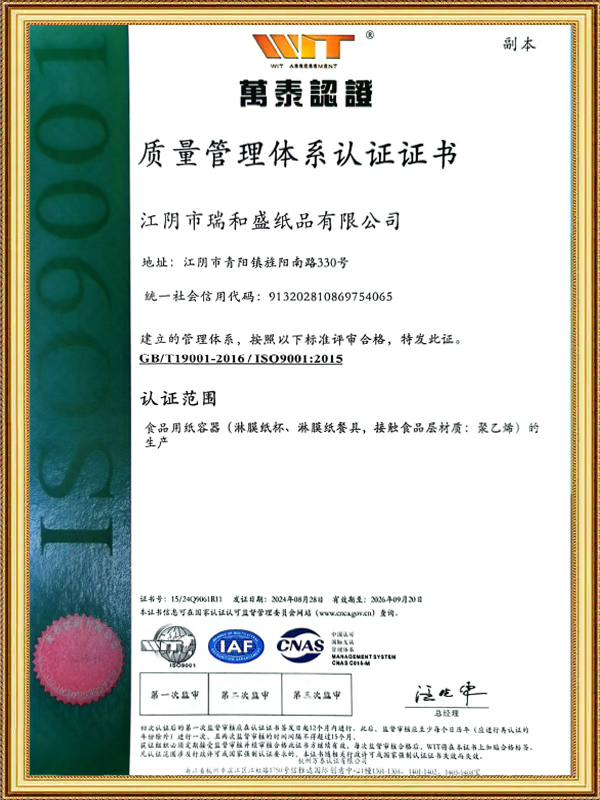
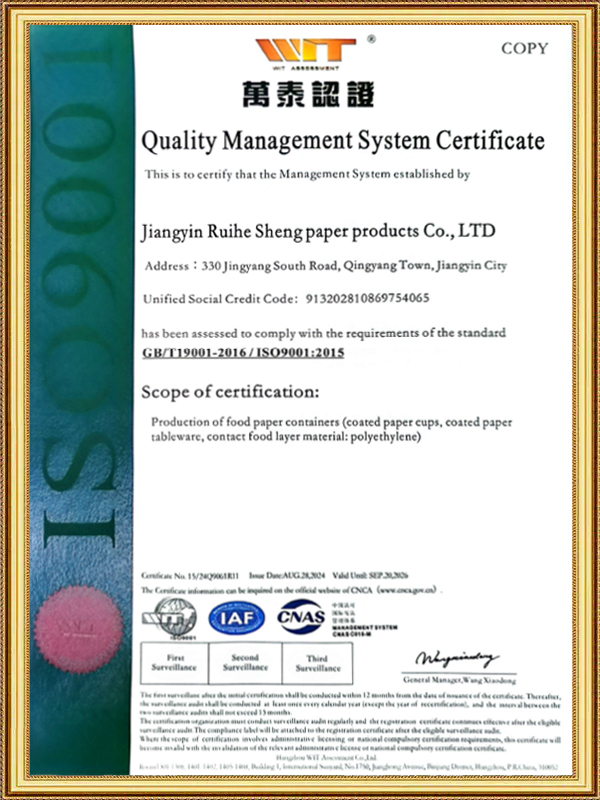
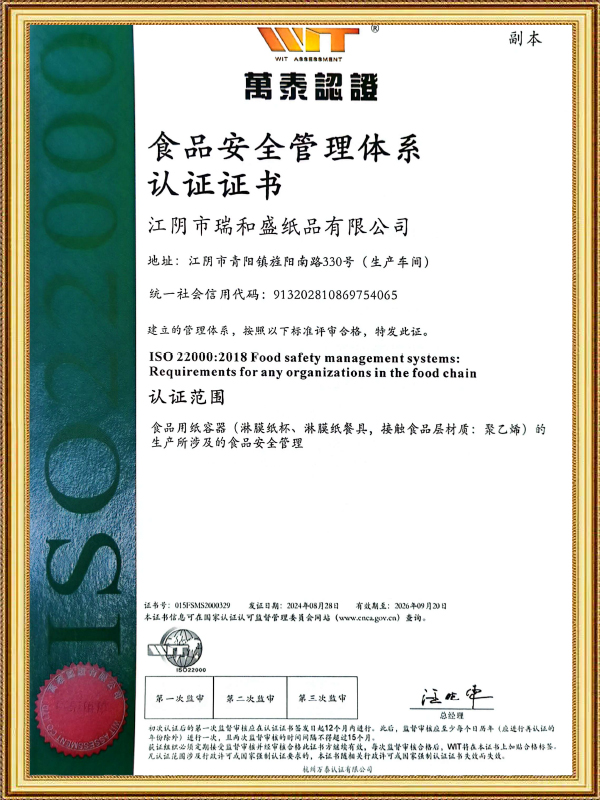
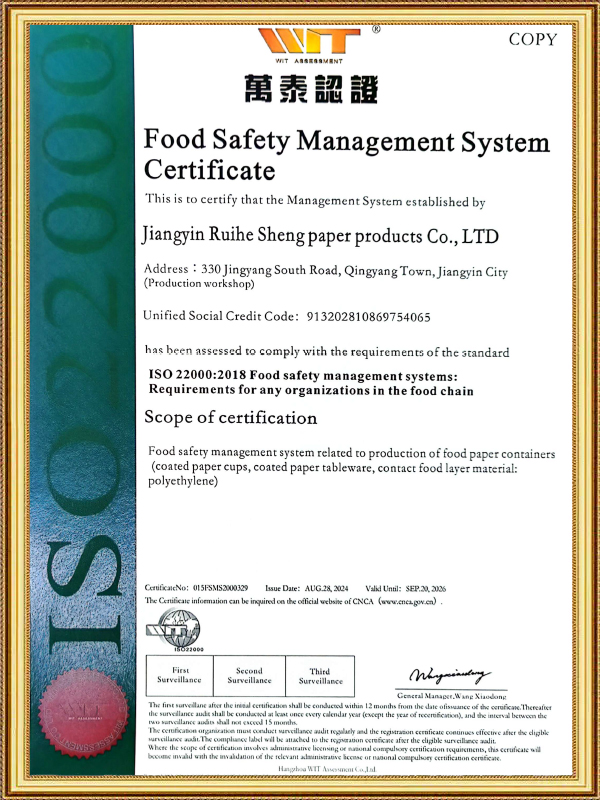
Boat trays are produced on a controlled sequence that runs from incoming material to warehouse dispatch, with inspection points placed where a defect would otherwise be repeated across a whole batch. Our quality system is certified to ISO9001, ISO22000, FSC, BRC and SGS, and we also hold SABER, SYDEX, IAF and CNAS accreditations.
- Raw material procurement — pulp, laminating materials and ink.
- Incoming inspection against production standards.
- Paper cutting to the required sheet size.
- Die-cutting and forming of the basic structure.
- Flexographic or UV printing of patterns and text.
- Die-cutting and moulding into the final tray shape.
- Gluing, folding and assembly.
- Finished inspection of dimensions, strength and print quality.
- Packaging of qualified product.
- Warehousing, order allocation and logistics dispatch.
Finished inspection covers dimensional accuracy against the approved drawing, seam and fold integrity, board stiffness under a loaded portion, and print registration. Batch records keep production traceable from material lot through to the packed carton.
Information We Use to Configure Your Solution
A boat tray quotation is only useful when it matches the filling line, the menu and the distribution route. These are the inputs our engineering team works from when we prepare a configuration and price.
- Portion and capacity — target fill volume, food piece size and whether the tray is single-serve or sharing.
- Food characteristics — hot or cold, grease or moisture level, sauce content and expected holding time.
- Structure — fold style, base geometry, compartment count, lid requirement and stacking or nesting needs.
- Board and barrier — kraft, white or recycled surface, grammage, coating route and compostability target.
- Print — artwork files, number of colours, print sides, finish and ink specification.
- Packing and logistics — carton count, nested or flat-packed format, pallet configuration and delivery schedule.
- Market requirements — destination country, labelling and documentation needs for the shipment.
- Volume — first order quantity, repeat demand and any seasonal peaks to plan capacity against.
Packing, Documentation and Delivery Scope
Boat trays ship nested or flat-packed depending on the construction, counted into export cartons and palletised for container loading. We supply the packing specification, carton dimensions and pallet layout with the order confirmation so warehouse teams can plan receipt before the shipment arrives.
Our production base runs 100+ automated machines across paper boxes, cups, bowls, corrugated containers and multi-compartment trays, with annual output in the billions of units. That capacity lets us hold a boat tray programme alongside related items such as the FRENCH FRIES BOX and other snack formats, so a menu can be packed from one supplier and one delivery schedule.
Boat Shape Paper Tray Questions
What capacities do you manufacture?
Our standard boat tray tooling covers 100 ml, 140 ml, 200 ml, 280 ml, 300 ml, 320 ml, 350 ml, 400 ml, 450 ml, 650 ml, 750 ml, 800 ml and 900 ml formats, including elongated octagonal serving trays and two-compartment boats. Capacity can be adjusted with new tooling when a project needs a specific fill volume.
Are the trays suitable for hot and greasy food?
Yes. We produce boat trays from grease-resistant paperboard for fried and oily items and offer water-resistant barrier options for sauce-heavy portions. Both hot and cold applications are supported, and the board grade is selected against the food type and holding time.
Can we print our own branding on the trays?
We print single-sided and double-sided decoration using flexographic and UV presses, in spot colour or four-colour work, with water-based inks as standard. Hot stamping, partial UV, embossing and laminating are available for premium finishes, and we provide structural design, rendering and sampling before mass production.
Do you offer lids and compartment dividers?
Two-compartment boat trays with a divider are part of the range, including versions supplied with a clear lid for dual-flavour snacks and sauce separation. Paper lids and box covers are produced within our dining accessories lines for programmes that need a closed format.
Which certifications apply to your boat trays?
Our quality and food safety systems are certified to ISO9001, ISO22000, FSC, BRC and SGS, with additional SABER, SYDEX, IAF and CNAS accreditations. Compostable constructions are supported by TÜV industrial composting certification, and we use FSC certified paper materials with plant-based inks and algae coatings.
What do you need from us to prepare a proposal?
Send the target capacity, food type and serving temperature, preferred fold or base style, compartment and lid requirements, board and barrier preference, print artwork, packing format, destination market and order volume. With those inputs we confirm the structure, board grade, print route, packing specification and delivery schedule for your programme.
